Yes. A woman can wear men's socks any day of the week, and plenty of them do without anyone noticing. The useful question is not whether it is allowed, but whether the sock stays where it was knitted to stay. A sock is built around four zones sized to a foot: the cuff, the leg, the heel pocket and the foot length. The yarn does not care who buys it. The geometry does.
Here is the working rule. If your foot length sits inside the men's sock size range printed on the label, and the heel pocket lands under your heel bone instead of halfway up your Achilles tendon, the sock will behave. If the heel pocket rides high and the toe box carries extra fabric, you will feel it as bunching, slipping or a seam that rubs. Women in US shoe sizes around 8.5 and above usually find men's crew and mid-calf socks genuinely comfortable. Women with smaller feet can still wear them, but the best results come from ribbed, terry-lined or looser home styles where a little extra length does no harm.
Why Men's and Women's Socks Fit Differently
The difference is not decorative. In US sizing, a men's shoe size runs roughly 1.5 sizes below the equivalent women's size, so a women's 8.5 is close to a men's 7. Sock sizing follows that gap, which is why a men's sock labelled 10 to 13 often covers women's shoe sizes 9.5 to 12 comfortably and starts to feel loose below that.
Construction adds a second layer of difference. The four zones a woman should check before buying men's socks are:
- The cuff circumference, which controls pressure marks and whether the sock slides down inside a shoe.
- The heel pocket depth, which decides whether the sock rotates on the foot during walking.
- The foot length from heel to toe seam, which decides whether fabric piles up in front of the toes.
- The leg height, since a men's crew sock can reach further up the calf than a women's crew of the same name.
One more variable matters: stretch. Socks knitted with 2 to 5 percent elastane or spandex recover around the ankle and arch, and a stretchy rib can forgive a size gap of one step. Socks knitted almost entirely from cotton, or with a dense double-needle structure and low stretch, do not forgive anything. If you are trying men's socks for the first time, start with a stretch rib or a looped terry style rather than a thin flat-knit dress sock.
Sock Size Conversion: Women's Shoe Size to Men's Sock Size
Use the table below as a starting point, then verify on your own foot. Sock labels vary between brands, and a size range that fits one knit structure may feel tight in another.
Approximate conversions between women's US shoe sizes and common men's sock size ranges, with the fit result most women report.
| Women's US shoe size |
Closest men's shoe size |
Men's sock size that usually fits |
Typical result |
| 5 to 6 |
3.5 to 4.5 |
9 to 11 |
Heel pocket rides high, extra toe room, best kept for sleep or thick home styles |
| 6.5 to 8 |
5 to 6.5 |
9 to 11 |
Wearable in ribbed or terry knits, cuff may sit loose on a narrow ankle |
| 8.5 to 10 |
7 to 8.5 |
10 to 13 |
Good fit in most crew and mid-calf styles, heel pocket aligns well |
| 10.5 to 12 |
9 to 10.5 |
10 to 13 |
Snug fit, check toe length inside narrow shoes before a long walk |
| 12.5 and above |
11 and above |
13 to 15 |
Men's sizing is often the only off-the-shelf option that reaches the right length |
Where Men's Socks Work Well for Women
Cold Weather, Sleep and Home Wear
This is where the size gap disappears. A thick looped or brushed sock is designed to be roomy, so a woman wearing a men's version gains warmth and cushioning without losing anything. Men's mid-length woolen socks in autumn and winter weights are a good example: the wool blend traps heat, the wider cuff sits over a legging or pajama leg without pinching, and the extra length keeps ankles covered on a cold floor.
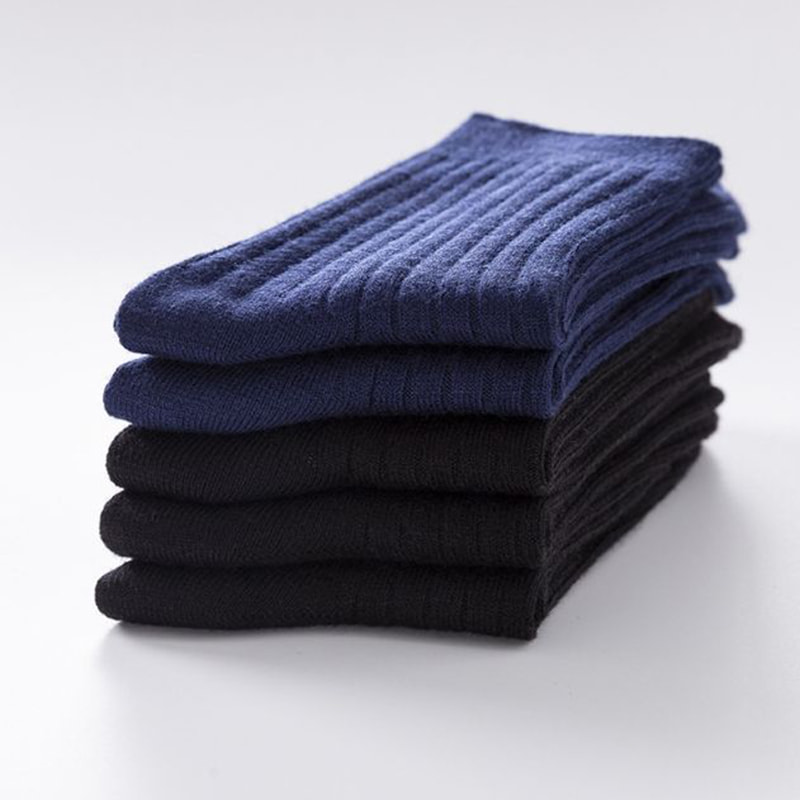 Men's Mid Length Woolen Socks for Autumn and WinterWomen can wear these men's wool-blend mid-length socks for warmth and cushioning, with a roomy fit that covers ankles on cold floors.View Product →
The same logic applies to heat storage looped socks, which use a terry interior to hold warm air close to the skin. Women who wear them indoors rarely describe them as men's socks at all. They describe them as the warm ones.
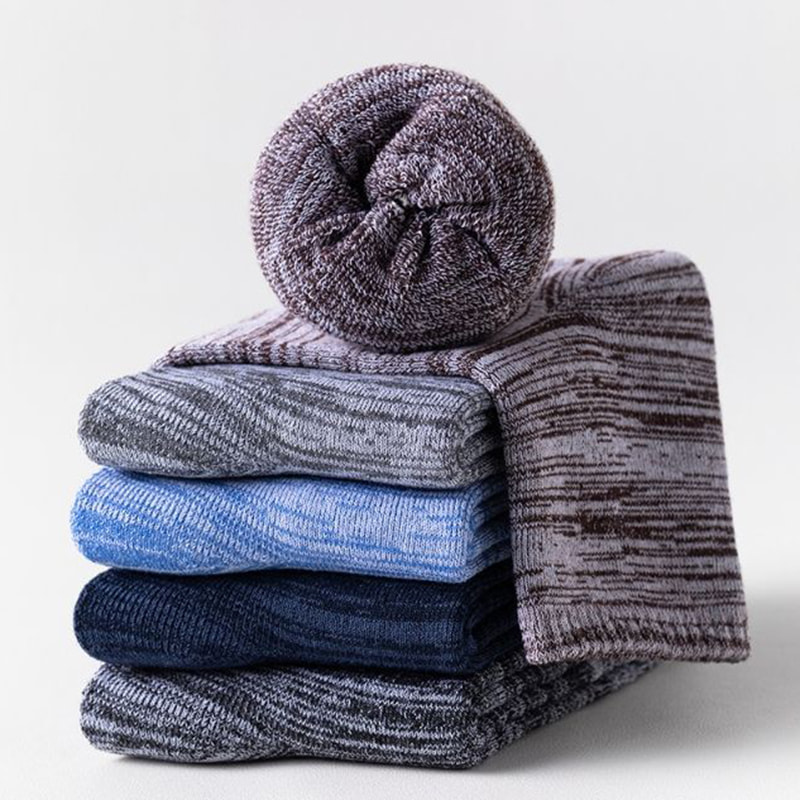 Men's Thickened Heat Storage Looped Mid Length SocksThese men's looped socks lock in warmth with a thick terry interior and remain breathable, so women wear them indoors as the warm ones.View Product →
Athletic, Studio and Recovery Use
Sports socks are the least gendered category in the drawer. Cushioned running socks, compression socks and grip socks are usually built on a unisex last, and the men's version simply offers more room in the toe box and a slightly wider cuff. A woman with wider feet, swelling from long shifts on her feet, or a preference for extra cushioning under the arch can often move into men's athletic styles with no downside at all. Grip socks used for yoga, pilates and trampoline parks are another case where the cut matters far more than the label: silicone dots under the sole, a snug arch band and a cuff that stays put.
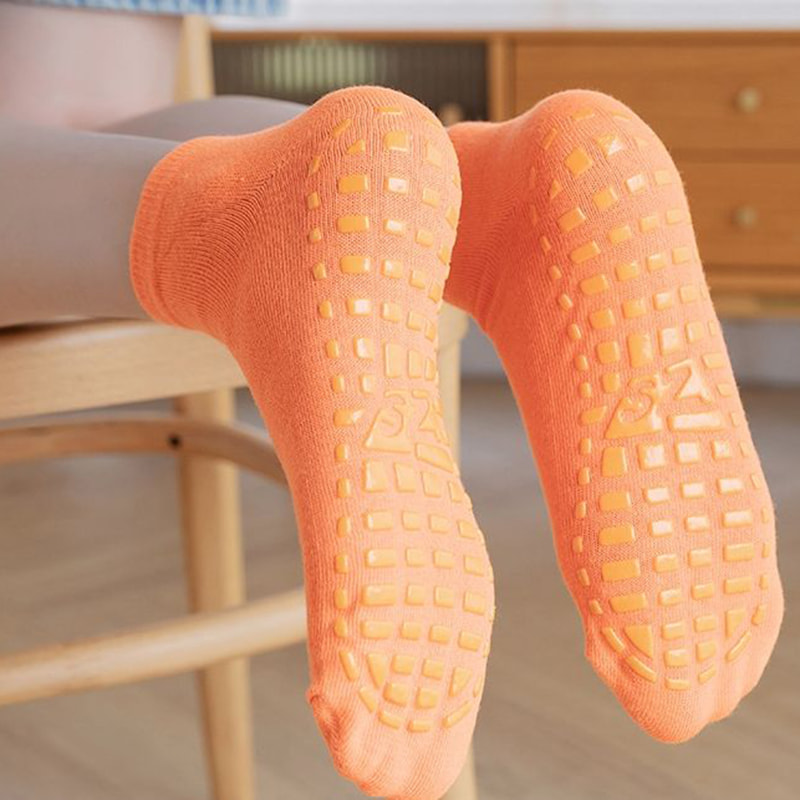 Adult Yoga Socks with Anti-Slip DotsFor yoga and floor exercise, these socks use dot-shaped anti-slip particles that grip the mat; absorbent materials keep feet dry during practice.View Product →
Where Men's Socks Fall Short
Honesty helps here. There are situations where a men's sock is simply the wrong tool, and no amount of styling fixes it.
- No-show and liner socks in ballet flats or low pumps. Extra fabric has nowhere to hide and will show above the shoe line or bunch under the arch.
- Thin dress socks inside narrow loafers or heels. The surplus length folds at the toe and the heel pocket drifts, which is how blisters begin.
- Fashion ankle socks with a specific cuff height. A men's ankle sock is often cut taller and will sit visibly above a women's shoe opening.
- Compression socks bought by shoe size alone. Compression is measured by calf circumference, not foot length, so check both numbers.
There is also a comfort detail that is easy to miss: cuff pressure. A men's cuff can be two to three centimetres wider in the relaxed state. On a narrow ankle, a wide cuff either slides down during the day or has to be tightened, which leaves a mark. If a cuff leaves a deep indent after ten minutes of wear, the sock is the wrong size, regardless of what the label says.
A Five Minute Fitting Test Before You Commit
Run this sequence whenever you try a men's sock for the first time. It catches most fit problems before a full day of walking does.
- Pull the sock on and press your heel into the floor. The heel pocket should cup the back of your heel, not sit above it.
- Check the toe. Pinch the fabric in front of your longest toe. Around five millimetres of slack is right; a full centimetre means the sock is too long for that shoe.
- Slide two fingers under the cuff. If they fit without straining the knit, the cuff is not too tight.
- Walk twenty steps on a hard floor, then check the heel again. A sock that has rotated sideways will not recover on its own.
- Put your shoe on and walk to the end of the room. Any fold you can feel under the arch or across the toes will turn into a pressure point within an hour.
If the sock passes all five checks, the fact that it came from the men's section is irrelevant. It fits.
Care, Shrinkage and Long-Term Fit
men's sock range can compare rib heights, looped interiors, mesh panels and needle counts side by side before committing to a size chart.
Three checks are worth building into any sampling round. First, measure the relaxed and stretched cuff circumference, not just the foot length. Second, test the heel pocket position on at least two foot lengths. Third, wash a sample three times and re-measure, because the numbers that reach the customer are the post-wash numbers.
Common Questions
Can women wear men's socks without it looking obvious?
In boots, sneakers, home wear and most athletic settings, yes. The visible difference usually comes from cuff height above a low shoe opening, so choose a sock height that stays below the shoe line or well above it.
Are men's socks always wider than women's?
Usually, but not by a fixed amount. Cuff circumference typically differs more than foot width, and a stretch rib narrows that gap considerably. Two socks labelled the same size can behave differently depending on needle count and elastane content.
What is the biggest mistake when switching sizes?
Judging fit by length alone. A sock can be the right length and still have the heel pocket in the wrong place, which is what causes slipping and rubbing.
The Takeaway
Women can wear men's socks whenever the heel pocket, cuff and toe length line up with their own foot. In thick home, sleep, boot and athletic styles, that alignment happens more often than most people expect, and the size gap disappears into the fabric. In thin dress and no-show styles, the geometry is far less forgiving. Check the heel, count the toe slack, test the cuff with two fingers, and buy the sock that passes those three checks rather than the one that matches a label. Fit is the only rule that matters.


