Aturan penataan gaya yang paling dapat diandalkan Kaus Kaki Pria adalah mencocokkan warna kaus kaki dengan celana, bukan dengan sepatu, karena hal ini menciptakan garis visual yang tidak terputus dari pinggang hingga pergelangan kaki yang membuat kaki tampak lebih panjang dan keseluruhan terlihat lebih menarik. Penata gaya dan pemandu pakaian pria secara konsisten menyebutkan pencocokan celana sebagai aturan default yang paling aman , khususnya untuk suasana bisnis dan formal di mana warna kaus kaki yang tidak serasi dapat terlihat tidak disengaja dan bukan merupakan pilihan gaya yang disengaja.
Di luar aturan dasar ini, pilihan kaus kaki menjadi peluang untuk ekspresi pribadi yang halus setelah dasar-dasar warna, panjang, dan bahan dipahami, sehingga pola dan tekstur dapat diperkenalkan tanpa berbenturan dengan pakaian lainnya.
Mencocokkan Kaus Kaki dengan Pakaian Formal dan Bisnis
Dalam suasana formal dan bisnis, tujuannya adalah siluet yang bersih dan kohesif, bukan kaus kaki yang menonjol. Warna solid yang selaras dengan warna celana tetap menjadi pendekatan standar untuk jas, kemeja, dan celana panjang khusus.
Pedoman kaus kaki formal
- Celana biru tua cocok dipadukan dengan kaus kaki biru tua atau arang
- Setelan arang atau hitam membutuhkan kaus kaki hitam atau abu-abu tua
- Panjangnya yang melebihi betis mencegah kulit terlihat saat duduk
- Kain bergaris halus atau bertekstur halus menambah detail tenang tanpa merusak formalitas
Kaus kaki di atas betis secara khusus direkomendasikan untuk pakaian formal karena panjang kru standar dapat turun dan memperlihatkan kulit di atas sepatu saat duduk, yang dianggap sebagai kesalahan gaya yang kecil namun nyata dalam lingkungan profesional.
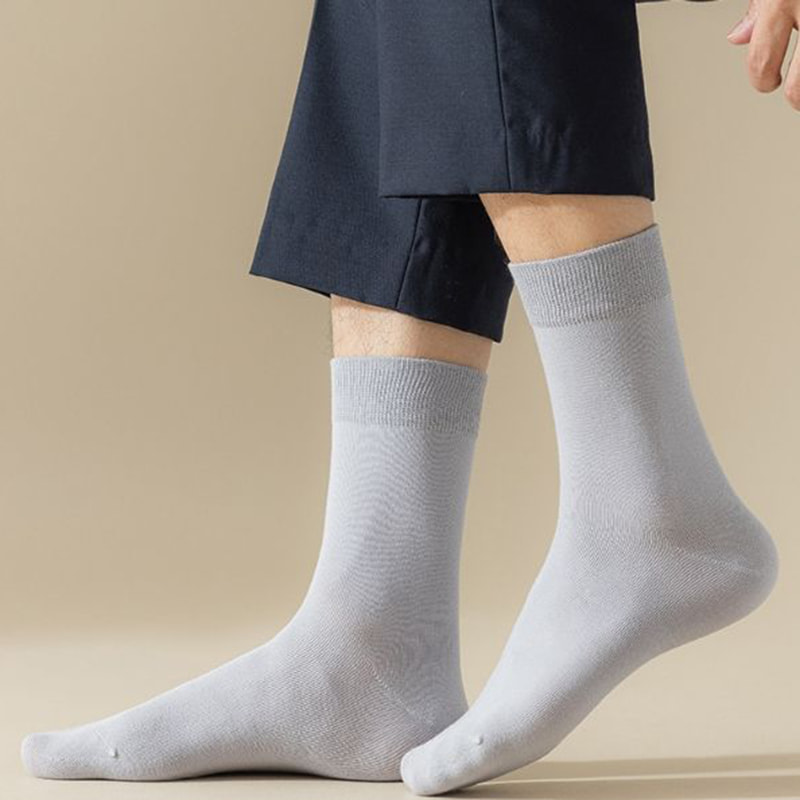
Menghadirkan Pola dan Warna dalam Bisnis Kasual
Pakaian kasual bisnis memberikan lebih banyak ruang untuk memperkenalkan pola dan warna sambil tetap menjaga keseluruhan tampilan tetap utuh. Di sinilah kaus kaki dapat beralih dari fungsi murni ke pernyataan gaya kecil.
Pendekatan pemasangan pola
| Celana padat | Padukan dengan baik dengan kaus kaki bermotif atau bertekstur halus untuk kontras |
| Celana bermotif | Paling cocok dipadukan dengan kaus kaki padat untuk menghindari kekacauan visual |
| Pakaian netral secara keseluruhan | Satu warna kaus kaki yang berani dapat menjadi aksen pakaian |
Pendekatan penataan gaya yang umum adalah dengan menggunakan satu warna aksen dari kemeja, dasi, atau kotak saku dan memadukannya dengan kaus kaki, sehingga menciptakan koneksi visual yang halus di seluruh pakaian tanpa perlu mencocokkan semuanya dengan tepat.
Penataan Kaus Kaki Kasual dan Akhir Pekan
Pakaian kasual menawarkan kebebasan paling besar, dan di sinilah warna, pola, dan bahkan desain baru yang lebih berani dapat dikenakan tanpa memperhatikan aturan pencocokan yang ketat. Celana chino, jeans, dan celana panjang kasual semuanya cocok dipadukan dengan pilihan kaus kaki yang lebih beragam.
Tip gaya kasual
- Kaus kaki panjang kru cocok dipadukan dengan jeans dan celana chino kasual
- Kaus kaki no-show atau berpotongan rendah cocok dengan sepatu pantofel dan sepatu kets kasual yang dikenakan tanpa penutup kaus kaki yang terlihat
- Pola atau warna yang berani dapat memperkuat pakaian yang sederhana dan netral
- Campuran katun menawarkan kenyamanan bernapas yang cocok untuk pakaian kasual sepanjang hari
Suasana santai adalah saat pemasangan kaus kaki yang sedikit tidak serasi atau tidak terduga dianggap sebagai gaya pribadi yang disengaja dan bukan kesalahan, tidak seperti di lingkungan yang lebih formal yang mengharapkan konsistensi.
Memilih Panjang Kaus Kaki yang Tepat untuk Berbagai Sepatu
Panjang kaus kaki harus dipilih berdasarkan model sepatu yang dikenakan, karena panjang kaus kaki yang salah dapat membuat kulit terlalu banyak terlihat atau membuat bagian dalam sepatu tidak nyaman.
| Sepatu resmi | Panjangnya melebihi betis atau pertengahan betis untuk mencegah kulit terlihat saat duduk |
| Sepatu kets dan sepatu kasual | Panjang kru atau seperempat untuk kenyamanan dan cakupan sehari-hari |
| Sepatu pantofel dan sepatu perahu | Durasi ketidakhadiran untuk penampilan yang bersih dan tanpa kaus kaki |
Panjang kaus kaki adalah salah satu detail gaya yang paling diabaikan , namun hal ini secara langsung memengaruhi seberapa halus tampilan suatu pakaian saat seseorang duduk atau menyilangkan kaki, sehingga pantas untuk dicocokkan dengan sepatu dan acara daripada menetapkan satu panjang untuk setiap pakaian.
Pilihan Kain dan Pengaruhnya terhadap Gaya dan Kenyamanan
Bahan pembuat kaus kaki memengaruhi tampilan dan kinerjanya sepanjang hari. Berat dan hasil akhir kain juga memengaruhi apakah kaus kaki terlihat formal atau kasual.
- Campuran wol merino yang halus memberikan hasil akhir yang halus dan formal yang cocok untuk acara berpakaian
- Campuran katun memberikan kemudahan bernapas dan daya tahan untuk pakaian kasual sehari-hari
- Rajutan berusuk atau bertekstur menambahkan detail visual yang halus tanpa terlihat terlalu kasual
- Campuran sintetis yang menyerap kelembapan cocok untuk pakaian aktif atau cuaca hangat
Pilihan bahan juga mempengaruhi umur panjang dan retensi kesesuaian, karena bahan berkualitas rendah cenderung kehilangan elastisitas dan melorot di sekitar pergelangan kaki setelah dicuci berulang kali, sehingga merusak tampilan yang sudah tertata rapi.
Aturan Sederhana untuk Menghindari Kesalahan Umum Kaus Kaki
Beberapa kesalahan yang berulang cenderung merusak pakaian yang sudah direncanakan dengan baik, dan menghindarinya sering kali sama pentingnya dengan memilih warna atau pola yang tepat.
- Mengenakan kaus kaki atletik putih dengan sepatu formal atau celana panjang khusus
- Memilih panjang kaus kaki yang terlalu pendek untuk postur duduk yang dibutuhkan pada acara tersebut
- Padukan kaus kaki bermotif berani dengan outfit bermotif yang sudah ramai
- Membiarkan kaus kaki yang sudah usang dan kendur mengurangi penampilan yang tajam
Menyimpan laci kaus kaki yang tertata rapi dengan pilihan formal, kasual bisnis, dan kasual yang dipisahkan dengan jelas memudahkan Anda mendapatkan kaus kaki yang tepat dengan cepat tanpa memilih apa pun yang ada di atasnya, yang sering kali menjadi penyebab ketidakcocokan pakaian.
Membangun Koleksi Kaus Kaki Serbaguna
Lemari kaus kaki yang lengkap mencakup berbagai kesempatan tanpa memerlukan banyak pasang. Titik awal yang praktis mencakup warna-warna netral solid untuk pakaian formal, beberapa pasangan bermotif halus untuk pakaian kasual bisnis, dan beberapa pilihan yang lebih berani untuk pakaian akhir pekan.
Merek seperti ZJBL mendesainnya sendiri Kaus Kaki Pria dalam rangkaian lengkap ini, menawarkan gaya formal, kasual bisnis, dan kasual sehingga membuat koleksi serba guna dan siap untuk acara tidak memerlukan sumber dari banyak tempat.


